
Specialties04Conventional care
Built for telehealth-native women's health.
Menopause and hormone care has gone telehealth-first and multi-state, with consumer health data arriving faster than legacy charts can absorb it. Ona is built to keep up — agile where the old EHR is rigid.
Women's health is the fastest-moving segment in the market right now. Menopause and hormone care has gone telehealth-native, practices operate across state lines, and patients arrive with hormone tracking, symptom logs and wearable data the legacy EHR was never designed to absorb. The pain isn't documentation complexity — it's keeping a fast-evolving, telehealth-first model from outrunning the software underneath it.
Ona is co-designed with practitioners in this space — including Lara Briden, ND, a recommending advisor on the landing page. That shows up in the details: telehealth that opens on a clean screen, a conversational intake that handles sensitive history gracefully, charting that keeps the long arc legible, and a mobile-first portal where patient-reported data actually lands.
Three things women's health practices lean on.
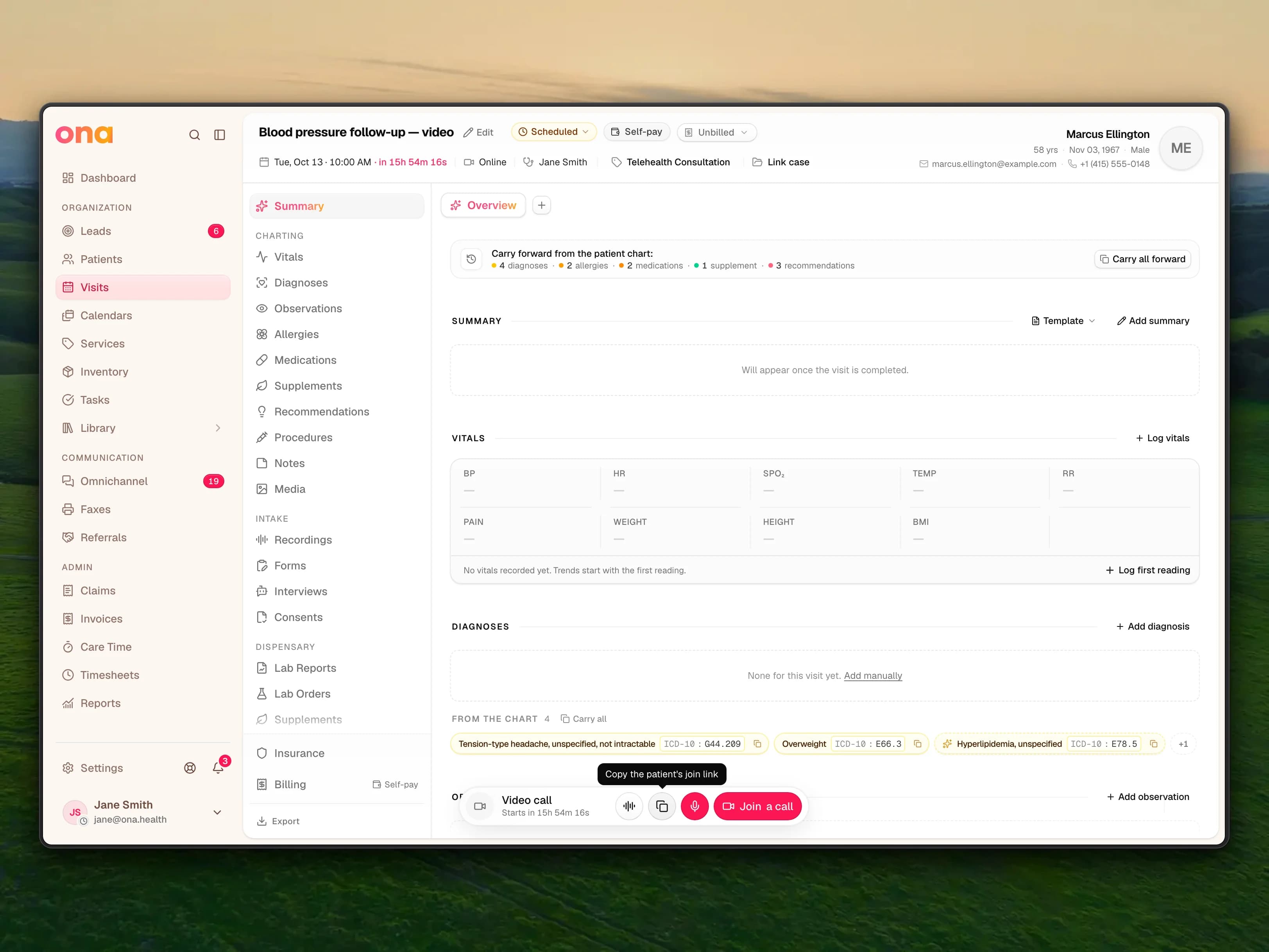
Encrypted browser-based video with camera and mic previews, a proper waiting room and one-click join — no downloads, no third-party links. The visit is stitched into the visit record, so a telehealth-first practice still keeps one chart.
From the first tap in the portal to the next plan.
Step 01
Intake that earns trust.
The conversational intake walks patients through sensitive questions a flat form would make them abandon. Answers arrive with a summary and suggested chart records, so you open the session already caught up.
Step 02
A visit that uses its minutes.
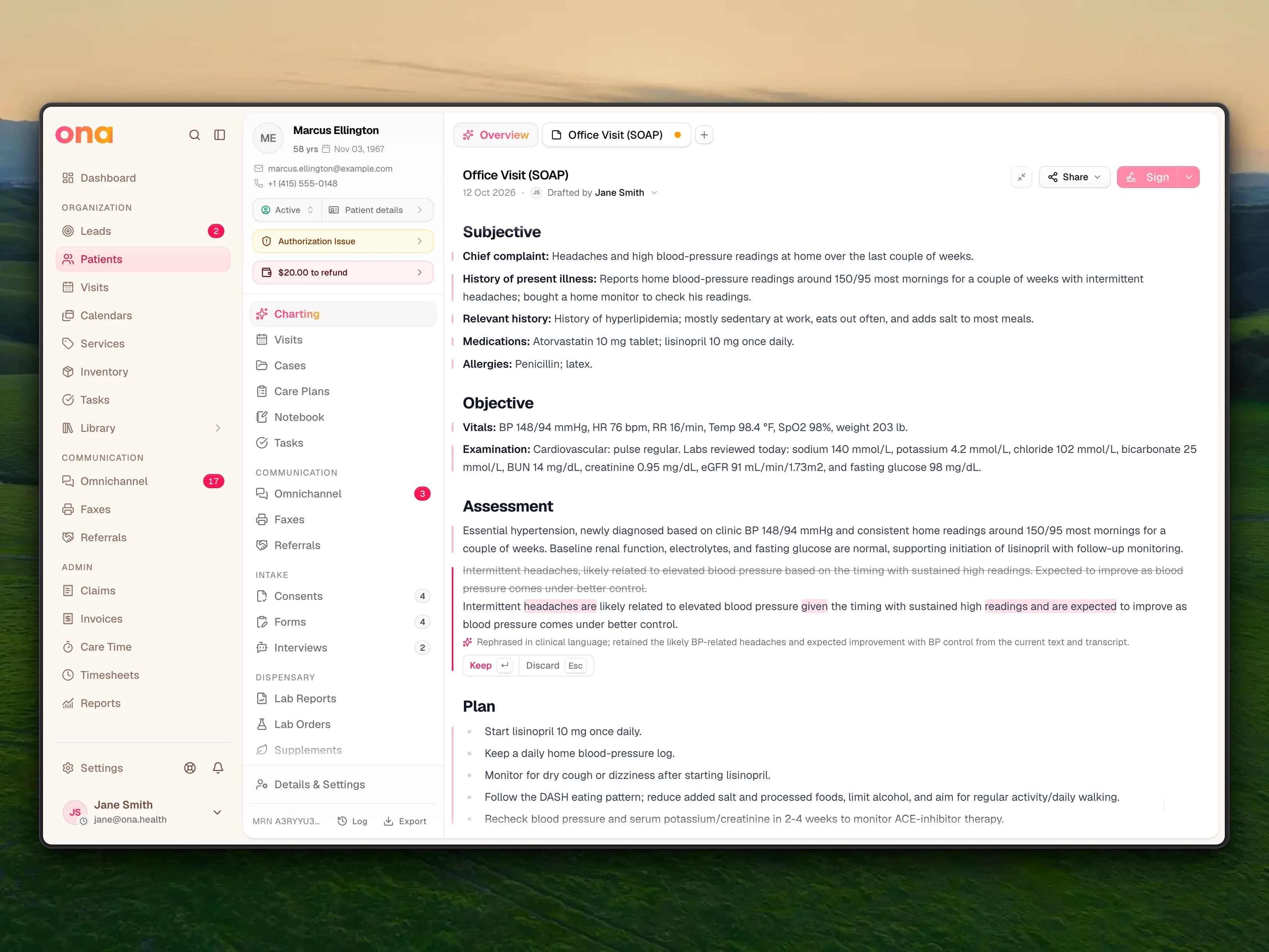
Telehealth opens on a clean screen; recording keeps you in conversation, and the note drafts from the transcript when you're ready. Multi-state, telehealth-first care runs from the same chart.
Step 03
A plan that lives where the patient does.
Documents, messages, the food journal and next visits sit in one mobile-first portal. Patients can book, reschedule, complete intake and sign consents without calling the office.
Step 04
A follow-up that starts with evidence.
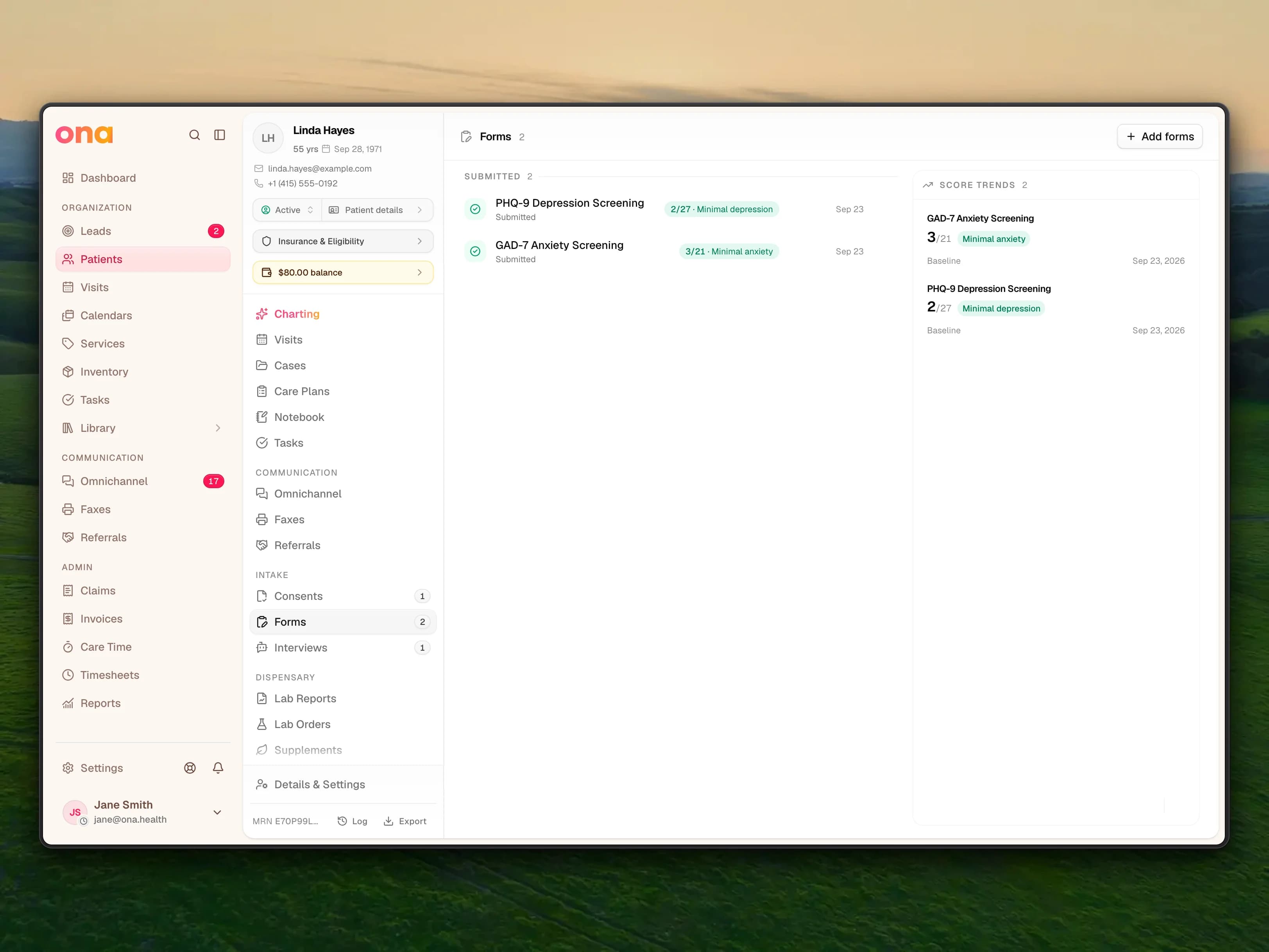
Food journal trends, intake answers and the messaging thread sit on the patient's chart, so the next visit opens with the picture in plain view and the conversation starts where it should.
I strongly recommend Ona as a tool for practitioners — it does everything for you!
Women's Health, answered.
Is Ona built for telehealth-first, multi-state practice?
Yes. Telehealth is encrypted, browser-based and stitched into the chart — no third-party rooms — and the same record runs across locations, so a telehealth-native, multi-state model lives in one place.
How does intake handle sensitive topics?
Interviews walk patients through their history as a chat in plain language, following up where an answer warrants it — useful for delicate topics a flat form would make them abandon. Anything that needs fixed wording or a score stays a form.
Where does patient-reported data land?
On the patient's chart. Patients log meals in the food journal by searching a food or snapping a photo, and you review calorie and macro trends against the targets you set. Forms, interviews and messages land in the same record, and the patient portal keeps visits, shared documents and messages in one mobile-first login.
Can I use my own charting template?
Yes. Notes draft against SOAP, your own templates or a blank page — your sections, your voice — with Ona filling only the fields you marked from the recording, intake and chart.
See Ona in women's health.
Book a demo and we'll walk through your own workflows — no slides, no pitch.
- Live walkthrough
- Free data migration
- 14-day free trial